NTSB releases report for fatal Stone County plane crash
STONE COUNTY, Ark. (KAIT/KARK) – Officials have released the preliminary report of a plane crash that resulted in a Mississippi man’s death.
Van Buren County Judge Dale James told content partner KARK-TV that 68-year-old Robert Phillip Mathis of Corinth, Mississippi, was flying from Fayetteville on Oct. 29 when his plane went down near the Stone County line.
A preliminary report released on Dec. 9 by the National Transportation Safety Board said that the morning of the crash, Mathis flew the plane from Corinth to an avionics shop in Fayetteville to fix an autopilot issue.
“A visual inspection revealed that there were two loose bolts securing the autopilot pitch servo capstan assembly to the servo mount bracket,” the report stated. “Additionally, the elevator pitch control bridle cable appeared to be over-tightened. The autopilot pitch servo was removed for bench testing and was not reinstalled before the accident flight.”
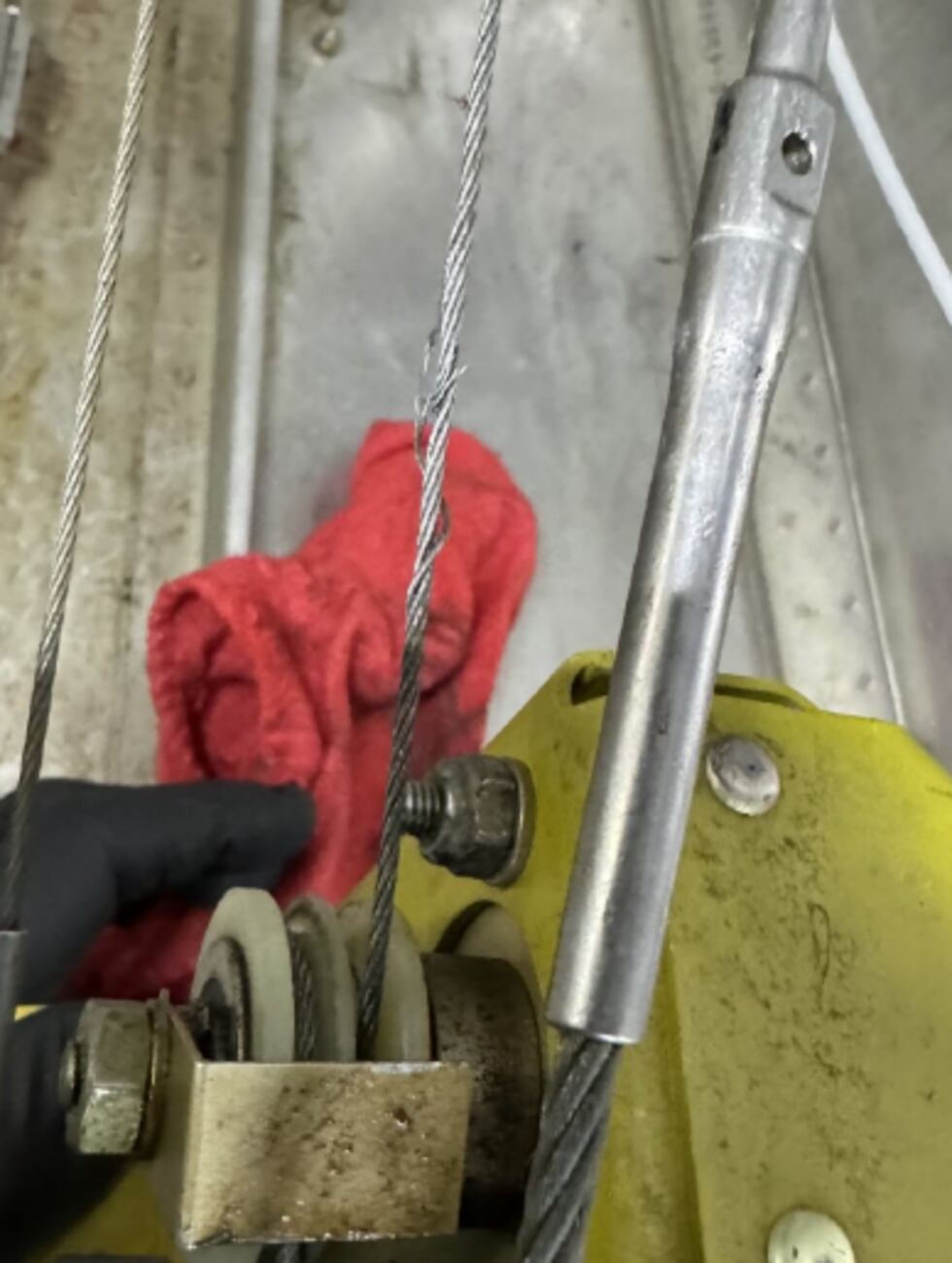
Upon further examination, the technician found “excessive grease” on the pitch trim cable. When he tried to wipe it off, a frayed portion of the cable was snagged. The technician warned that the cable “could fail during flight” and recommended a replacement.
The report stated Mathis wanted his aviation mechanic to replace the cable and “he would fly the airplane without any repairs being completed.”
“According to the avionics technician, the pilot [Mathis] did not appear to be concerned about the frayed pitch trim cable. Specifically, the pilot reportedly told the avionics technician that the frayed cable was ‘not that bad’ and that he had ‘seen worse cables,” the report stated.
The document also stated Mathis reportedly told the secretary that the technician was “overreacting” about the cable’s condition.
As a precaution, the technician decided to install a safety wire to “bridge” the frayed section of the cable.
The technician attempted to move the pitch trim system to neutral as he believed it would help with takeoff, but he found that the cable was “catching” on the capstan while Mathis moved the cockpit pitch trim control wheel to the neutral position.
The report stated the technician “wound the frayed wires around pitch trim cable and applied ‘super glue’” to secure the wires. The technician confirmed the pitch trim was in neutral and installed the safety wire, but he noted he couldn’t get the wire “significantly tight” when installing it.
“When interviewed after the accident, the avionics technician explained that the installation of the safety wire was not meant to disable the pitch trim system, but rather to keep the frayed pitch trim cable tethered if it failed during flight,” the NTSB said. “The avionics technician acknowledged that the installation of safety wire was ‘not standard protocol” but because the pilot intended to fly the airplane without replacing the frayed pitch trim cable, it was the only way he knew to ‘make it safe’ if the frayed pitch trim cable failed during flight.”
After the wire was installed, Mathis moved the elevator and rudder controls to see if they function properly.
“The avionics technician stated that he intentionally did not test the pitch trim because he was ‘afraid to move it and break the frayed cable,” the report stated.
The NTSB said the technician was the only employee who worked on the plane and that he did not ask another technician to check his work after the wire was installed, nor did he and Mathis discuss if a Federal Aviation Administration-issued ferry permit was required for the flight.
As the technician was closing out the work order, Mathis departed the facility at 1:55 p.m.
The report stated that at 2:22 p.m. Mathis told an air traffic controller he was having trim issues and requested the closest airport with a 5,000-foot-long runway. The controller replied that the Batesville Regional Airport (BVX) was closest to Mathis.
At 2:23 p.m., there was another transmission that consisted of audible breathing.
“The controller told the pilot that BVX was about 45 nanometers ahead of the airplane’s current position. The pilot did not reply to the transmission,” the report stated.
At 2:24 p.m., the controller asked Mathis if he could hear her transmissions, and he replied, “loud and clear.”
The controller told Mathis if the airplane continued to descend, they might have to relay communications through another airplane in the area, but Mathis said, “That’s not going to be possible cause we are using all of our energy to overcome the trim.”
The controller told the pilot that Clinton Municipal Airport had a 4,000-foot-long runway and was south of the plane’s position. Mathis said, “Roger, we’ll probably need the 5,000 feet to control the airplane, declaring an emergency.
Mathis’ final transmission was near 2:25 p.m. when he told the controller, “One soul on board, four hours of fuel,” according to the report. The controller asked another pilot in the area to relay her communications to Mathis, but there were no responses from Mathis.
The plane then crashed at 2:26 p.m. near Arlberg, Arkansas. Mathis was killed as a result, the NTSB said.
“A survey of the wreckage debris path confirmed that the airplane descended wings level into the trees,” the report stated. “The distance between the initial tree strike and the main wreckage was about 245 feet. The airplane fragmented into several portions during the descent through the trees.”
Officials found that the safety wire was attached to both the nose-up and nose-down pitch trim cables, which contradicted the technician’s explanation that he attached the wire to “bridge” the frayed area of the nose-up trim cable.
“Based on the post-accident examination, the installed safety wire would have allowed the pitch trim to be moved between full-nose-down and the point where the safety wire became sufficiently taught to prevent further cable movement in the nose-up direction,” the report stated. “Based on the avionics technician’s statement, the safety wire would have been taught near the neutral pitch trim position.”
Segments of the pitch trim cable circuit were retrieved for additional examination at the National Transportation Safety Board Materials Laboratory.
The National Transportation Safety Board and the Federal Aviation Administration are investigating the incident.
To report a typo or correction, please click here.
Copyright 2024 KAIT. All rights reserved.